
Home > Paint > Cleaning and deglossing
Glossy paints dry to a hard, nonporous surface, making it almost impossible for new paint to adhere effectively.
The glossy surface lacks what painters call “tooth,” a slight roughness that gives paint something to cling to. It doesn’t take much effort to create tooth-just sand the surface lightly with either a fine-grit sandpaper or steel wool. Or you can use a chemical deglosser if you have a lot of area to cover or would prefer not to sand. When the entire surface looks dull and ceases to be reflective, it’s ready to paint. To detect glossy areas, shine a flashlight across the surface and see if the light reflects.

1. Fill gaps in trim and baseboard with paintable caulk. After drying, sand all glossy areas lightly with 220-grit sandpaper. Use a sanding block for even sanding on flat surfaces, a brass-wire brush for fluted surfaces.

2. Remove the sanding or brushing residue by wiping it with a damp rag or a tack cloth. You can also wipe down oil-base paint dust with a rag soaked in mineral spirits, which evaporates almost instantly.
High-volume deglossing
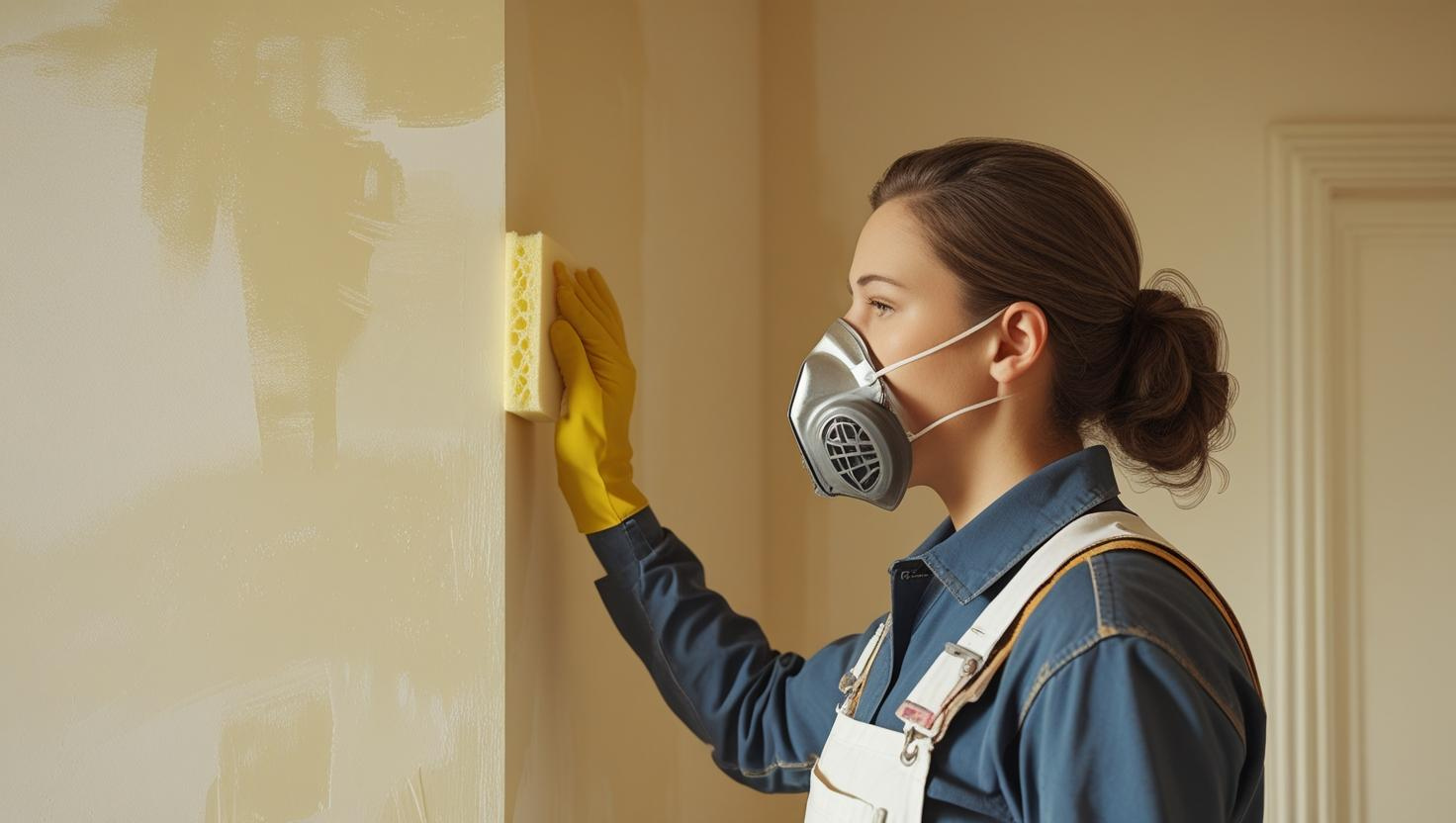
While roaming through the paint department, you may see something called liquid deglosser. It can save you some work by eliminating hand sanding, but it won’t remove surface imperfections, which improve by sanding. What it will do is create a surface that the paint can cling to, as long as you apply the paint within the specified time (don’t work too far ahead). It’s also caustic, and the strong fumes are dangerous. If you use it, ventilate the area well, wear neoprene rubber gloves, goggles, and the respirator recommended by the deglosser manufacturer.

WORK SMART
PREP TIPS
Pros have developed tricks that make their jobs easier, and you can do the same things yourself:
and you can do the same things yourself:
- Mark any areas that need special attention by drawing around them or making an “X” with the edge of a quarter. The mark will remind you to fix those areas, and the faint marks cover up easily with primer.
- Fine dust is a major annoyance when sanding plaster, drywall, and joint compound. To minimize it, use a drywall wet-sander. This is a sponge with coarse abrasive on one side (to level ridges and high spots) and fine abrasive on the other side (to smooth).
- Try sanding the walls with drywall screen instead of using sandpaper. The durable open screen is coated with abrasive silicon carbide particles but resists clogging. Dust rinses out of the screen, which can then be used again.
- If you’re sanding a large area, close off the room by taping plastic over the doors. Turn off the air-conditioning so dust won’t be drawn into the return vent and travel to other rooms. Clean up dust promptly, using a shop-type vacuum fitted with a special filter for trapping fine particles.





Leave a Reply