
Home > Paint > Treating stains, mold, and mildew
Floods or even a leaking roof do a lot of damage on their own, but the worst part can be the aftermath, when walls or ceilings sprout a horrible coat of mold or mildew caused by dampness. Even if mold doesn’t appear, the moisture wicks through plaster or drywall and leaves a stain.
First, fix the problem at its source to keep it from recurring. Then destroy any mold by treating it with household bleach.
Severe damage may require complete replacement of plaster or drywall, but smaller damaged areas can be patched.
Painting isn’t enough to cover a stain; sooner or later it rears its ugly head again.
The only cure for a stain is to first apply a stain-blocking primer (see ..), and then put on that new coat of paint.

Water leaches chemicals from wood, drywall, and plaster. When it seeps through a wall or ceiling, unsightly stains are often left behind.

Mildew is a spore that grows in damp areas. Given enough moister mildew flourishes, particularly in closets or after water damage.

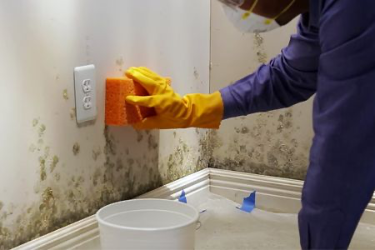
1. Use a mold remover product, or mix three parts water to one part laundry bleach in a bucket. Wear hand and eye protection.

2. Apply the mixture liberally with a sponge. Apply again after 20 minutes even if the mold has disappeared, to be sure it is destroyed.

3. Rinse off the solution and dead mildew with clean, fresh water. Let it dry before cleaning with TSP or a TSP substitute (see ..) Then apply a stain-blocking primer and finally, paint.
SAFETY ALERT
BEWARE WHAT YOU BREATHE
Never mix bleach with ammonia or other household cleaners. Commonly used cleaners often contain ammonia, which reacts with bleach to produce toxic fumes. Inhaling these fumes can cause dizziness, nausea, cramps, or severe illness requiring hospitalization. If you breathe the fumes, go outside and breathe fresh air until your symptoms disappear.
Long-standing allergies, asthma, and illness can sometimes be traced to mold. Once established in a house, mold can be extremely difficult to eradicate. The job may require professional expertise. Moldtesting kits are available; look for help in the telephone directory or online.
WORK SMART
FIND THE REAL PROBLEM
Mildew or water stains are a sign of a larger problem. Find the source of the moisture and fix it before you try to make things look better.
Roof leaks are notoriously hard to locate because the waler runs along rafters before dripping, causing damage far from the actual leak; you might need to consul roots.
In a seldom-used damp-smelling closet, leaving a light on is sometimes enough to solve the problem. Or keep an open coniainer of desiccant on a shelf to absorb moisture.






Leave a Reply