
Home > Painting > Paint cleanup and disposal
Painting ingredients may be good for wall but they’re often bad for water, the plants, and animals. Recent studies show paint’s toxic effects, so clean-up methods have changed. The basic process is the same clean up latex paint with water and alkyd paint with mineral spirits. The new goal is to use as little of either as possible, and to dispose of the used liquids wisely.
Since requirements may vary, check with local authorities to find out which disposal methods are approved in your area.
Cleaning equipment
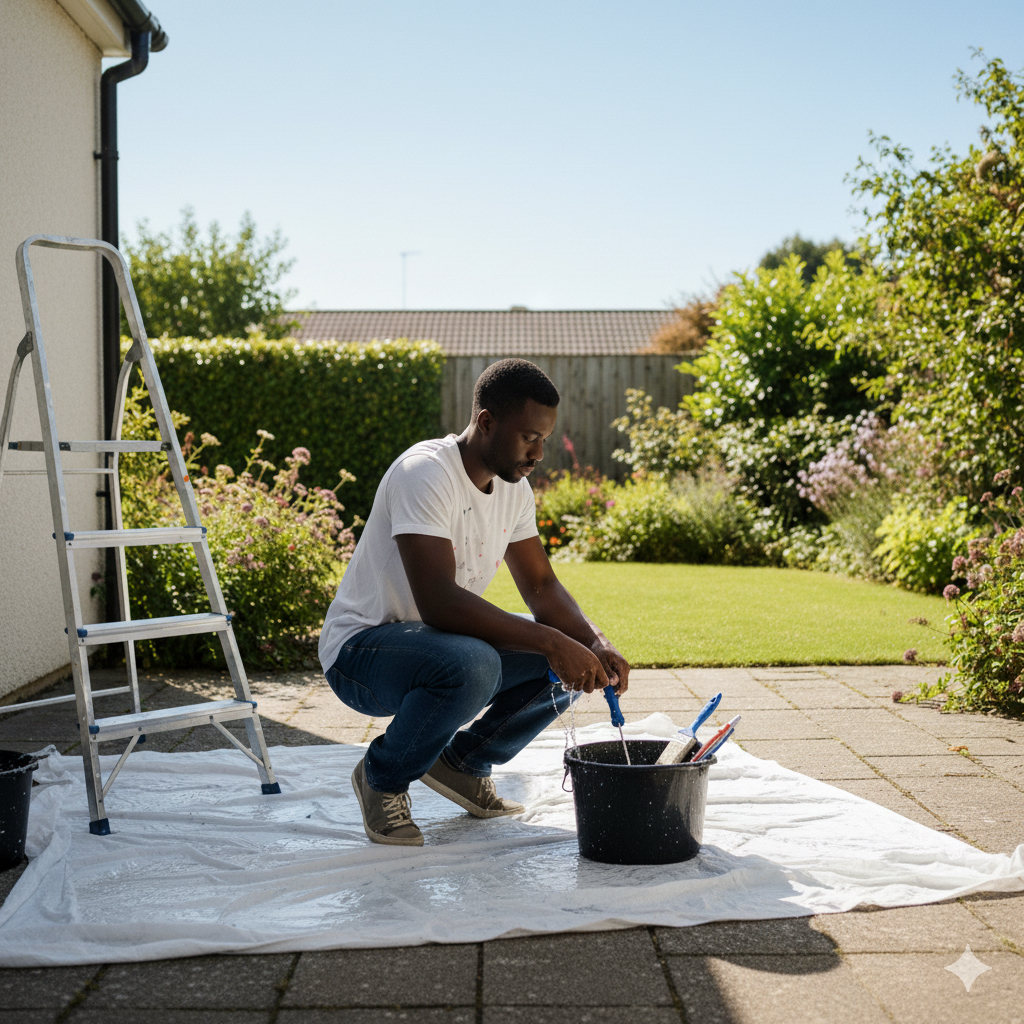
- Retrieve paint from rollers, brushes, and trays, and put it back into the paint can. Use a painter’s 5-in-1 tool to scrape the other painting tools.
- Use as little water or mineral spirits as possible, and don’t let them go down a drain. They pollute the water; even nontoxic solids can affect aquatic life.
- When cleaning more than one roller tray, reuse water or mineral spirits from the first tray in the other tray.
- Place the water or mineral spirits used for cleaning into a covered bucket, and let the solids settle.
- The next step depends on whether the paint is latex or alkyd.
1. Brush out as much of the paint as you can on a newspaper or other porous, disposable surface 🔻

2. Scrape the roller with a 5-in-1 tool to remove as much excess paint as possible 🔻

Cleaning up latex paint
- Use a paint hardner to convert any unused liquid paint to a solid, or Place the paint solids in a can and let evaporate until hard (add kitty litter to speed up the process).
- Consult your local waste disposal regulations for disposal of the solids.
Cleaning up alkyd paint
- Once the solids settle, pour the liquids into a sealable container and cap it.
You will be able to reuse the liquids the next time you need to clean up alkyd-covered brushes, rollers, and pans. - Seal the solid wastes in a can and put the can out for a trash disposal service that will take it to a licensed landfll.
If the liquids are too old or too paint-laden to use again, do not dump them on the ground or pour them down the drain. Do not let the solvents evaporate and throw out the remaining solids. Solvents are prime sources of volatile organic compounds and are strictly regulated in most areas. Instead take the solvents to a household hazardous waste disposal site for proper disposal.
Safe cleaning of oil-base (alkyd) paint
Use this process to clean brushes; it’s environmentally friendly and cuts down on the amount of solvent used
Let the solids settle at the bottom of the cans. Pour the water or thinner into clean cans for reuse.
When solids have dried, discard them; check with local authorities to see how lo dispose of alkyd solids.
Steps on how to clean oil-base (alkyd) paint from brushes
Step 1. Fill three cans with a couple of inches of water (for latex paints) or paint thinner (for oil-base paints) 🔻

Step 2. In the first can, clean the brush by swishing it around to remove most of the paint. Blot the brush on newspaper.

Step 3. Repeat the process in can #2, and then again in can #3.

Step 4. Dry the brush by slapping the ferrule on the heel of your hand, then blot the bristles with newspaper or paper towels. Hang the brush vertically to dry; store in the original cardboard holder to keep its shape







Leave a Reply