
Home > Paint > Painting over wallpaper
There are two schools of thought: One says you’ll create a mess if you try to paint over wallpaper; the other says, “sure, you can paint it.” It all depends on what you’re starting with, and what you do.
Removing the paper might be your best course, but only if it comes off fairly easily (you’ll know right away). If the paper was installed over unprimed drywall, or if there’s very old paper on plaster walls, it can be almost impossible to remove without damaging the wall, If there are several layers, though, you may have to go ahead and remove it, and be prepared to repair the damage.
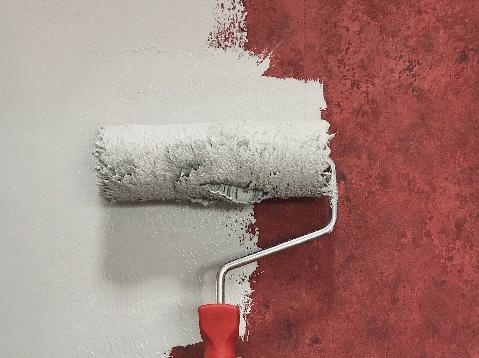
When the surface is smooth and in good condition, professional painters often prime and paint over existing paper unless its texture creates an odd-looking surface.
However, they do make sure the seams are tight and that the paper is securely on the wall. They clean, prime, and paint a test area to make sure the paper will still hold.
There are a couple of reasons not to skip the priming step. A tinted stain-blocking primer keeps the wallpaper pattern and colors from faintly showing through the paint. It also helps paint bond with the wallpaper surface, which may have a vinyl coating that makes it difficult for any paint to adhere well.
How to paint over wallpaper:
1. Residual wallpaper paste is invisible, but it will interfere with paint adhesion. To remove it, wipe the wall thoroughly with a wet sponge, rinsing frequently. Reglue any loose wallpaper and repair tears or dents with fast-drying surfacing compound. Remove dust and debris before continuing.

2. Apply a stain-blocking primer on a test area. Wait 24 hours. Slit any minor blisters or bubbles with a utility knife and reglue them with wallpaper adhesive. Apply the finish coat. If the coverage looks good, continue priming and painting the rest of the room.

Glazing wallpaper-Compare two effects: aging and fading.

1. Aging: Tone down overly bright wallpaper by antiquing it with glaze. Here, a coat of brown-tinted glaze is rubbed on the left side of black-and-white toile wallpaper to produce a muted, vintage effect. Control the amount of aging by wiping off the glaze until you are pleased with the effect. (Test first in an inconspicuous area.)

2. Fading: Simulate the fading effects of the sun, and make strong patterns less dominant, by applying white or light-tinted glaze. The left side of this paper was brushed with white glaze, which was then blended evenly with a rag. This process, like aging, can be done to any wallpaper that seems too bright or overly bold, even if the paper is already on the walls.
Leave a Reply