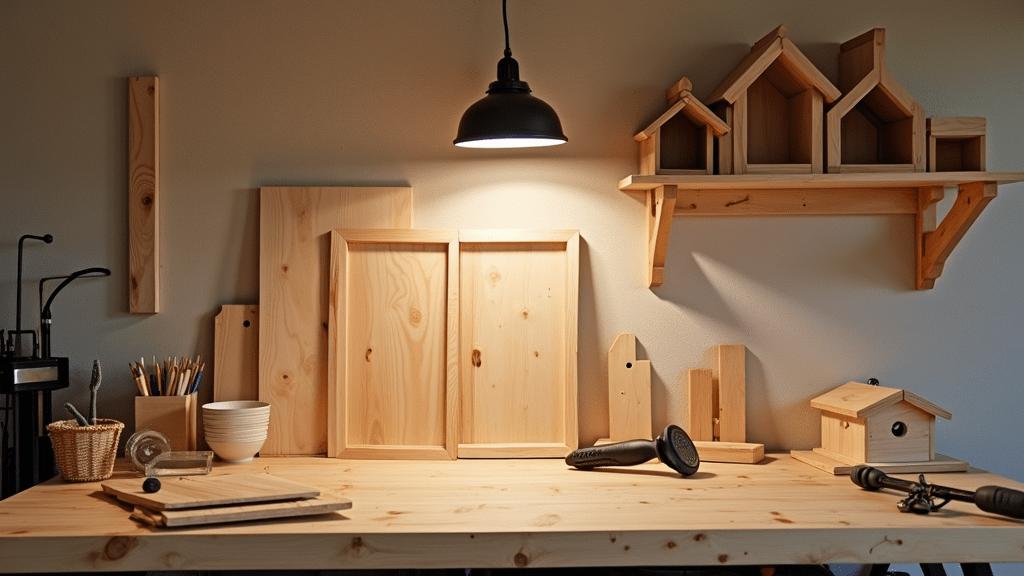
Starting your first woodworking project can feel intimidating—but it doesn’t have to be. I still remember my early days back in a 1970s shop class… learning to measure twice, cut once, and respect the craft. That mindset has stayed with me for over 40 years—and today, I want to help you start your own journey the right way.
This isn’t about perfection.
This is about building confidence, one cut at a time.
Why Woodworking Is the Perfect Beginner DIY Skill


Woodworking teaches you more than just how to build things. It teaches:
- Patience over rushing
- Precision over guessing
- Problem-solving through real-world challenges
When I first started, I didn’t have fancy tools. Just basic equipment, a willingness to learn, and a mindset focused on doing things right—not fast.
👉 That’s the same approach I still use today at Conley’s Home Improvement.
The Perfect Beginner Project: Simple Wooden Shelf
If you’re just getting started, this is one of the best first builds:
- Practical
- Affordable
- Easy to customize
- Teaches core woodworking skills
Tools & Materials You’ll Need


Tools:
- Tape measure
- Handsaw or circular saw
- Drill/driver
- Level
- Sandpaper or sander
Materials:
- 1×8 or 1×10 wood board
- Wood screws
- Wood glue
- Wall anchors (if mounting)
💡 Pro Tip: Start with pine—it’s affordable and easy to work with.
Step-by-Step: Build Your First Shelf
1. Measure and Plan


Decide where your shelf will go and measure carefully.
👉 This is where most beginners make mistakes.
Take your time here—accuracy matters more than speed.
2. Cut Your Wood


Cut your board to length.
- Keep your cuts straight
- Clamp the wood if needed
- Let the tool do the work—don’t force it
3. Sand for a Smooth Finish


Smooth edges and surfaces with sandpaper.
👉 This step separates a rough project from a professional-looking one.
4. Assemble and Secure


- Attach brackets or supports
- Drill pilot holes first
- Secure the shelf to the wall
💡 Lesson from experience: Skipping pilot holes can split your wood—don’t rush it.
5. Finish (Optional but Recommended)


Add stain or paint to protect and enhance the look.
⚠️ Common Beginner Mistakes (And How to Avoid Them)
- Rushing measurements → Leads to uneven cuts
- Skipping sanding → Leaves rough edges
- Using the wrong screws → Weak structure
- Ignoring wall studs → Unsafe mounting
👉 I’ve made these mistakes myself early on. The key is learning from them—not avoiding the work.
What This Project Really Builds


This isn’t just about a shelf.
It’s about building:
- Confidence
- Skill
- Independence
When you complete your first woodworking project, something shifts.
You stop thinking: “Can I do this?”
And start thinking: “What’s next?”
Final Thoughts
At Conley’s Home Improvement, I’ve always believed:
👉 You don’t need expensive tools to get started.
👉 You don’t need years of experience.
👉 You just need to start.
That first project might be simple…
But it’s the foundation for everything that comes next.
And if you stick with it—
You won’t just build projects.
You’ll build skills…
memories…
and a legacy that lasts a lifetime.
Watch the completeBeginner Woodworking Project from start to finish on my YouTube channel to see how to build a simple wooden shelf using beginner-friendly tools, materials, and techniques